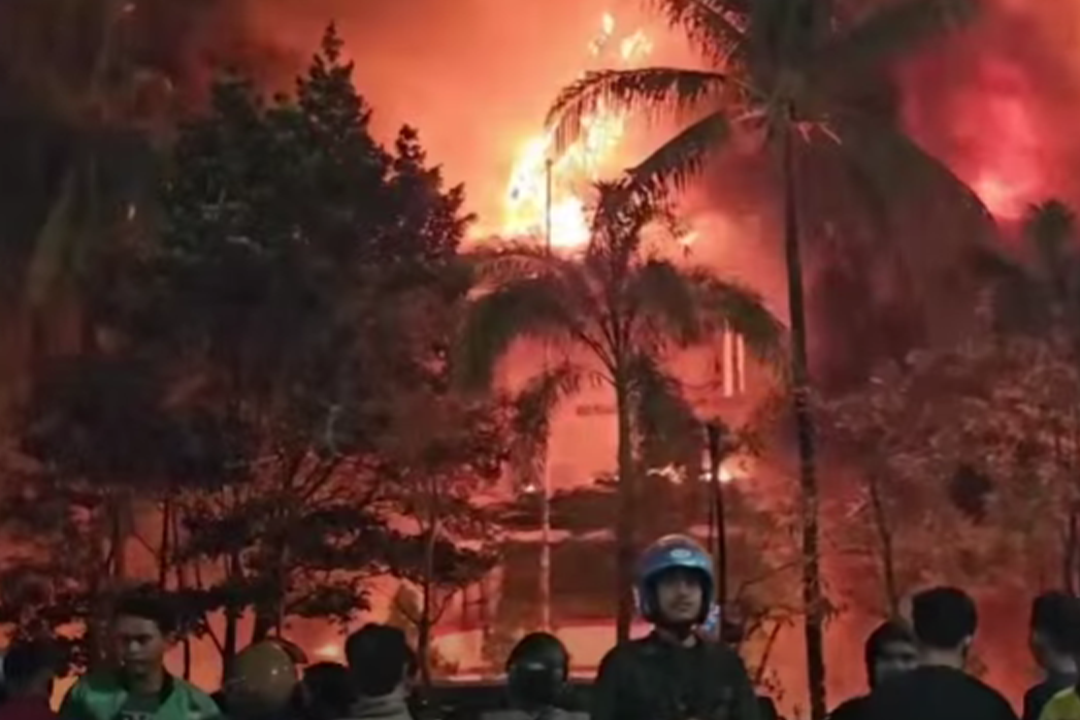
Three Dead After Protesters Torch Indonesian Parliament
Violence Erupts Across Multiple Cities
At least three people have been confirmed dead after protesters set fire to a regional parliament building in Makassar, South Sulawesi, marking the fifth straight day of violent unrest in Indonesia. Authorities reported that five additional individuals were hospitalized with burns and broken bones after jumping from the burning building in a desperate attempt to escape the flames.
Local disaster official Fadli Tahar said rescuers retrieved three bodies from inside the charred remains of the parliament building early Saturday morning. The deaths underscore the worsening violence that has gripped the country since demonstrations began earlier in the week.
Protests Spread Beyond Makassar
The unrest is not confined to South Sulawesi. In West Java’s Bandung city, protesters also set a regional parliament building on fire late Friday. Fortunately, no casualties were reported there, though significant property damage was confirmed.
In Surabaya, Indonesia’s second-largest city, demonstrators stormed the regional police headquarters after tearing down fences and setting police vehicles ablaze. Similar clashes were reported in Medan, Solo, Yogyakarta, Malang, Bengkulu, Magelang, Pekanbaru, and even in the easternmost Papua region.
Indonesian security forces responded with tear gas and water cannons to disperse crowds, but protesters fought back using fireworks, stones, and wooden clubs.
Trigger of the Unrest
The protests began in Jakarta on Monday, following revelations that all 580 Indonesian lawmakers receive a monthly housing allowance of 50 million rupiah (approximately $3,200), in addition to their base salaries. Critics argue the allowance—introduced last year—is excessive and insulting in a country where the minimum wage in Jakarta is less than one-tenth of that figure.
With unemployment high and the cost of living soaring, many Indonesians view the housing benefit as a symbol of government insensitivity and corruption.
The anger further intensified when NasDem Party politician Ahmad Sahroni referred to critics of parliament as “the stupidest people in the world.” His Jakarta residence was later looted by protesters, with furniture and other household items stolen, according to local media reports.
A Death That Escalated the Anger
Protests turned deadlier on Thursday after a 21-year-old food delivery driver was killed by an armored police vehicle in Jakarta. Eyewitnesses say the vehicle sped through a crowd of protesters, running him over. His death has since become a rallying cry for demonstrators, sparking solidarity marches across Indonesia.
In Bali, hundreds of students and delivery drivers held a peaceful protest calling for justice, the release of detained demonstrators, and broader police reforms.
Arrests and International Reactions
By Thursday, nearly 1,000 protesters had been arrested in Jakarta alone, according to the National Commission on Human Rights. Foreign embassies—including those of the United States, Australia, and several Southeast Asian countries—issued advisories urging their citizens to avoid protest zones and large public gatherings.
Government Response
Indonesian President Prabowo Subianto canceled a planned diplomatic visit to China next week, citing the escalating violence. With parliament buildings torched, police stations attacked, and citizens killed, the unrest has grown into one of the largest waves of protests Indonesia has seen in years.
Authorities say they will continue efforts to restore order, but critics warn that heavy-handed crackdowns could fuel more anger on the streets. As tensions mount, the coming days are expected to be critical in determining whether the government can regain control or if the unrest will deepen into a full-scale national crisis.