Super Typhoon Ragasa Slams the Philippines, Thousands Evacuated
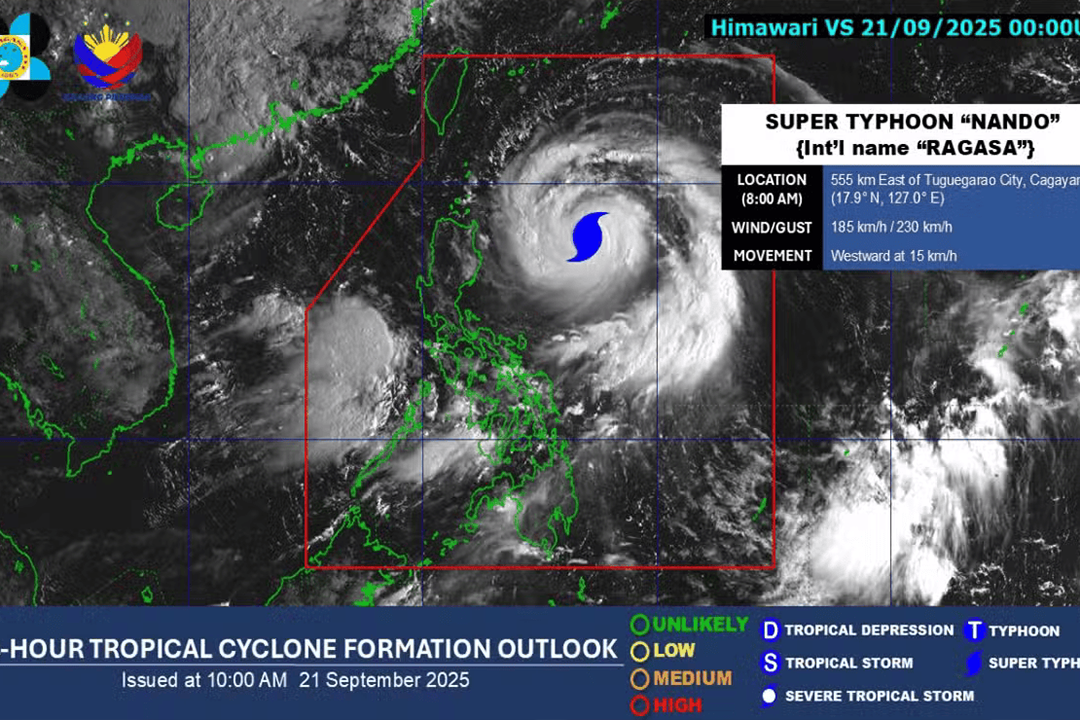
Super Typhoon Ragasa made landfall over Panuitan Island, one of the Babuyan Islands in northern Cagayan province, at around 3:00 p.m. local time (08:00 GMT) on Monday. The storm hit with maximum wind gusts of 285 km/h (177 mph), placing it among the strongest typhoons to hit the country in recent years. According to the Philippine Atmospheric, Geophysical and Astronomical Services Administration (PAGASA), Ragasa has “slightly” weakened but continues to pose a severe threat as it moves westward toward southern China.
Storm Surge and Flooding Threats
Despite the slight decrease in intensity, authorities warned of a “high risk of life-threatening storm surge”, with potential peak heights exceeding 3 meters (10 feet). PAGASA emphasized that even a weakened super typhoon can still unleash destructive flooding, landslides, and infrastructure damage across affected areas. The government has urged residents in vulnerable zones to heed evacuation orders and remain alert to changing weather conditions.
Evacuations and Widespread Disruptions
Thousands of people have been forced to evacuate their homes in preparation for Ragasa’s impact. Schools and government offices in multiple provinces, including in the capital Manila, were closed as a precaution. Local governments across Luzon have mobilized relief teams and emergency shelters to accommodate evacuees. In the Batanes and Babuyan Islands, which together are home to about 20,000 residents, the storm’s effects were particularly harsh. Many families in these areas live in poverty, heightening concerns about their ability to recover from the devastation.
Local Damage Reports
On Calayan Island, one of the Babuyan group, local information officer Herbert Singun reported that strong winds ripped off parts of a school roof, which then landed on an evacuation center just 30 meters away. The incident caused one minor injury. “Can you see those coconut trees swaying in the distance?” Singun said during a video call with AFP. “There were eight of them before. Now only four are still standing. That goes to show how strong this typhoon is.” His statement underscored the destructive force Ragasa continues to unleash across the islands.
Impact on Taiwan
Although Ragasa is not projected to make a direct hit on Taiwan, its outer bands are already drenching the island’s eastern coast with heavy rainfall. Nearly 300 residents in Hualien County were evacuated as a safety measure. Taiwanese authorities have closed forest areas and nature trails across southern and eastern regions, citing the risk of landslides and flash floods. Ferry services have also been suspended until conditions improve.
Ongoing Risks and Monitoring
Meteorologists stress that even with slight weakening, Ragasa remains extremely dangerous due to its massive wind speeds, storm surge potential, and rainfall levels. Emergency response units in both the Philippines and Taiwan continue to monitor the system closely as it moves toward the South China Sea and eventually southern China. Officials have warned residents not to let their guard down as heavy rains and strong winds are expected to persist in the coming days.
Looking Ahead
As one of the most powerful typhoons of 2025, Ragasa has already disrupted daily life, damaged infrastructure, and displaced thousands across northern Luzon. With the storm now moving westward, both regional and local governments are prioritizing rescue operations, relief distribution, and post-disaster assessments. While the full scale of the destruction remains uncertain, authorities continue to stress vigilance and cooperation from the public to minimize casualties and safeguard communities.