Philippines Urges Nations to Enforce UNCLOS Amid South China Sea Tensions
The Philippines has urged the international community to hold accountable those who violate international maritime law and engage in aggressive actions that endanger lives and undermine regional stability.
Call for Responsibility at the UN
At the sidelines of the United Nations General Assembly (UNGA) in New York, Foreign Affairs Secretary Theresa Lazaro co-chaired a maritime forum attended by representatives from 40 countries, including close Philippine ally the United States and other partner nations.
In her remarks, Lazaro warned of “increasing illegal, coercive, aggressive, and deceptive actions” at sea, noting the growing risks posed to maritime security.
“The oceans that connect our nations also commit us to a shared responsibility: keeping our seas peaceful, secure, and stable, for the benefit of all. In pursuit of this, we are guided by the UNCLOS, the constitution of the ocean,” Lazaro said, referring to the United Nations Convention on the Law of the Sea (UNCLOS).
Maritime Safety and Rights
Lazaro stressed that countries must reject actions “that risk the lives of seafarers, compromise the safety of vessels and aircraft, and impede the inherent rights of fisherfolk to fish.”
She also emphasized that international cooperation must remain anchored in the rule of law: “International cooperation, guided by international law, illuminates the way forward.”
Lazaro further urged nations to call out actions that threaten maritime safety and security, as well as those that violate UNCLOS.
Call for Peaceful Resolution
The Foreign Affairs chief reiterated the Philippines’ position on the peaceful settlement of maritime disputes. She stressed the importance of adhering to legally binding rulings by international courts and tribunals, including the 2016 arbitral award on the South China Sea, which invalidated China’s sweeping claims over the resource-rich waters.
“Let us continue our dialogue on various maritime issues, and call out actions that undermine maritime safety and security, and violate international law, particularly UNCLOS,” Lazaro stated.
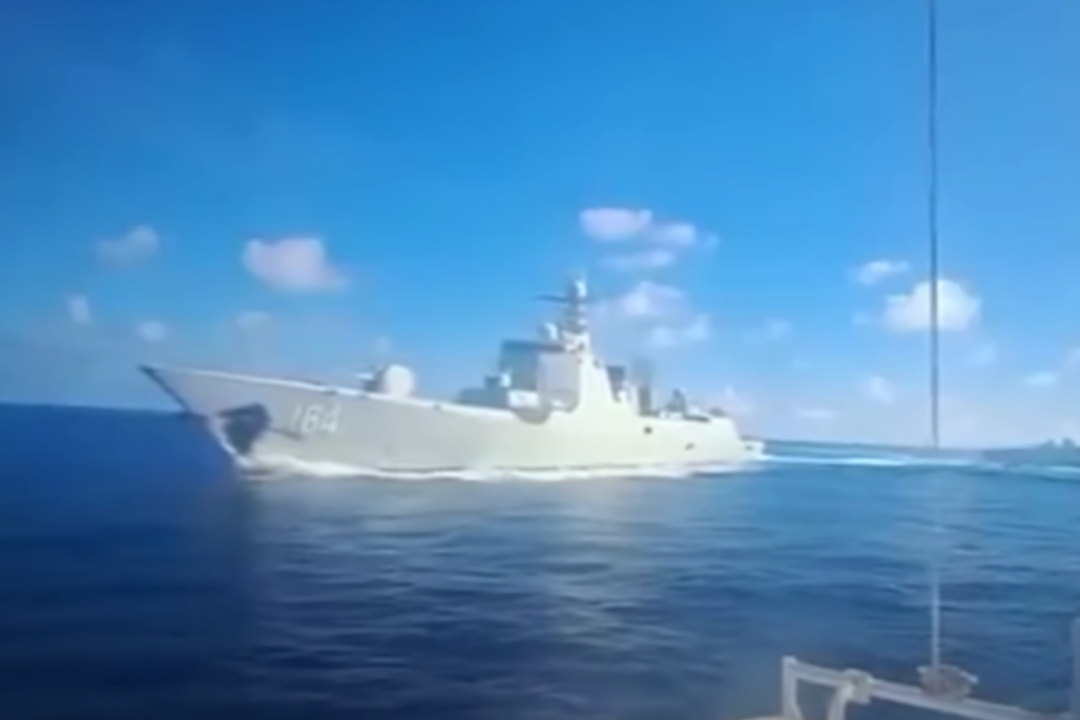
Confrontations between Chinese and Philippine coast guard and navy vessels have escalated in recent years. China continues to claim almost the entire South China Sea, deploying large fleets of coast guard, navy, and suspected maritime militia ships to assert its claims. These actions have been opposed by the Philippines, Vietnam, Malaysia, Taiwan, and Brunei.
The Philippines previously challenged the validity of China’s expansive territorial claims through the International Court of Arbitration, winning the case in 2016. However, Beijing has refused to recognize the ruling.
Japan’s Reinforcement of UNCLOS
Japan, a co-host of the maritime forum along with the US, Greece, the Netherlands, Romania, Australia, and the UK, underscored the importance of compliance with UNCLOS in safeguarding maritime order.
Japanese Foreign Minister Takeshi Iwaya stated: “In order to maintain the maritime order, it is extremely important to comply with international law. UNCLOS sets out the universal and unified legal framework governing all activities in the oceans and the seas.”
Iwaya added that Japan is committed to working with the international community to uphold the international order based on the rule of law and to achieve a secure and stable maritime domain.
Reaffirming Legal Frameworks
Lazaro concluded by stressing the “urgent need to reinforce and adhere to the body of legal instruments, rules, and norms that govern the maritime domain—the foremost of which is UNCLOS.”
She reaffirmed the Philippines’ commitment to abide by UNCLOS, preserve its integrity, and support its various applications. Lazaro also highlighted the importance of bilateral, regional, and multilateral cooperation, including joint maritime activities, in ensuring freedom of navigation and overflight.