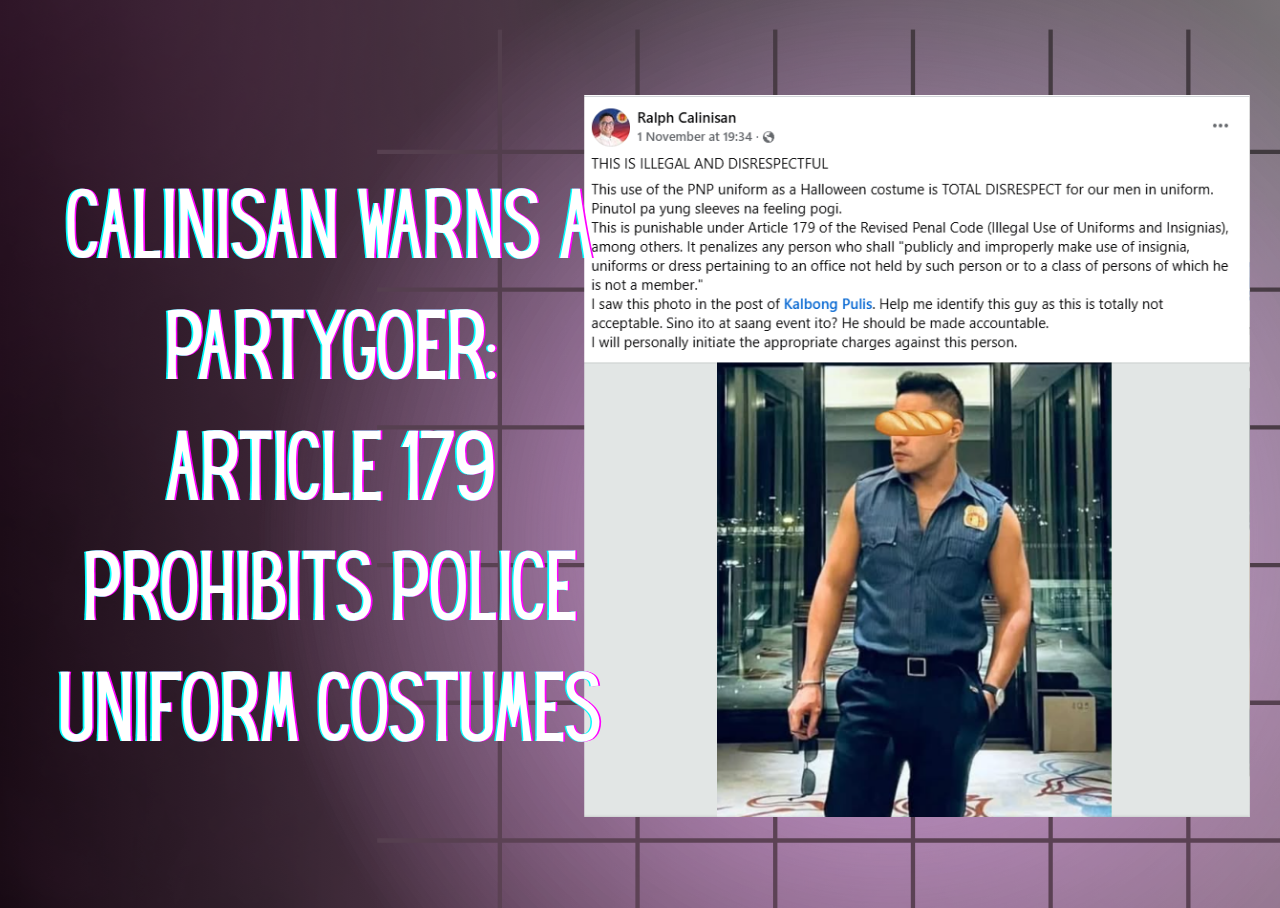
Partygoer Known as Dha Isidro Apologizes to NAPOLCOM After Wearing Police Uniform as Halloween Costume
Although it’s not a Filipino tradition to observe Halloween, some Filipinos still celebrate it by showcasing creative, spooky costumes every year. Halloween often brings out a mix of eerie costumes and pop culture tributes, providing people with an opportunity to express their creativity. Yet, some outfits can go too far. One partygoer, identified as Dha Isidro, learned this after drawing criticism for wearing a police uniform, prompting an apology to the National Police Commission (NAPOLCOM).
Monday, Nov. 3, Isidro has apologized to the NAPOLCOM after receiving backlash for wearing a police uniform as a Halloween costume. He attended a press conference led by Atty. Rafael Vicente Calinisan, who called him out on Sunday, Nov. 2.
How It Started
On Sunday, Nov. 2, Calinisan called out a picture of a guy wearing a PNP uniform as a Halloween costume. In his post, he said the Halloween costume is “TOTAL DISRESPECT for our men in uniform. Pinutol pa yung sleeves na feeling pogi.” He cited Article 179 of the Revised Penal Code, stating that anyone “who shall publicly and improperly make use of insignia, uniforms, or dress pertaining to an office not held by such person, or to a class of persons of which he is not a member” violates the law.
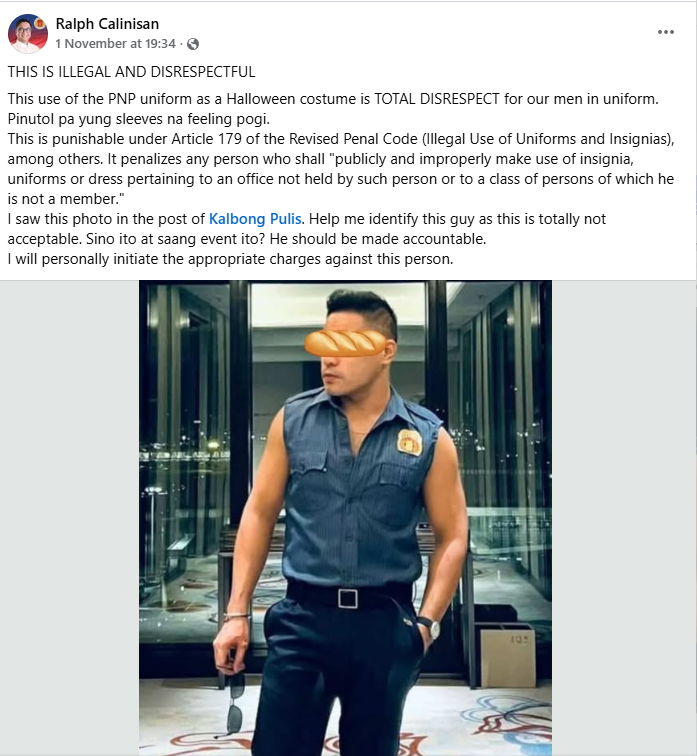
Following the post, Calinisan updated that the person wearing the PNP uniform had been identified. He said this individual is from Cavite and had deactivated his Facebook account.
What Is Article 179?
Article 179 of the Revised Penal Code of the Philippines addresses the illegal use of uniforms or insignia. It is part of Act No. 3815, enacted in 1930, and remains in force today.
According to the official text:
“The penalty of arresto mayor shall be imposed upon any person who shall publicly and improperly make use of insignia, uniforms, or dress pertaining to an office not held by such person or to a class of persons of which he is not a member.”
Why Article 178 Matters?
The law aims to prevent impersonation and protect public trust in government institutions. Unauthorized use of police, military, or other official uniforms can mislead the public, undermine legitimate authority, and facilitate crimes such as fraud or extortion.