Netanyahu and U.S. Secretary Rubio Meet in Jerusalem Amid Backlash Over Qatar Strike
Israeli Prime Minister Benjamin Netanyahu has signaled that further strikes on Hamas leaders remain possible, declaring that the group’s senior figures would not have immunity “wherever they are.” His comments came during a joint press conference in Jerusalem with U.S. Secretary of State Marco Rubio, amid heightened tensions following last week’s controversial attack in Qatar.
Strikes in Qatar Draw Global Reaction
The Israeli strike, which targeted senior Hamas officials in Qatar, has drawn sharp international criticism. Qatar is a close U.S. ally, and the move prompted condemnation from U.S. President Donald Trump as well as backlash across the Arab world.
According to Hamas, six people were killed in the strike, but its top leaders survived. Netanyahu, pressed by reporters on whether the U.S. had any role in the operation, was direct in his response:
“We did it on our own. Period.”
Arab Summit and Qatar’s Position
As Netanyahu defended Israel’s actions, Arab leaders gathered at a summit to express support for Qatar. The Qatari prime minister urged the international community to end what he called “double standards” and to hold Israel accountable for its actions.
U.S.-Israel Relations on Display
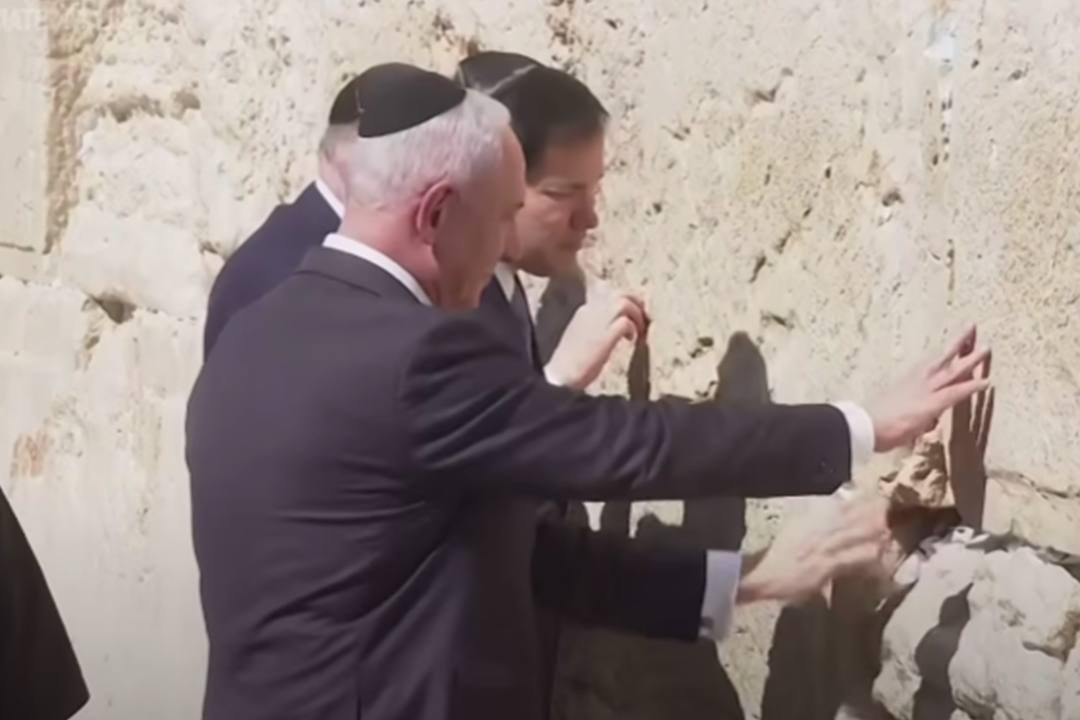
Despite the tensions, Netanyahu sought to underscore the resilience of ties with Washington. Standing with Rubio at Jerusalem’s Western Wall, he described the U.S.-Israel relationship as being “as durable as the stones in the Western Wall.”
Rubio, joined by U.S. Ambassador to Israel Mike Huckabee, placed a handwritten note into the wall during the visit, a traditional act of prayer and reflection. Both men declined to answer questions about the Qatar strike.
Gaza Operations Continue
Meanwhile, Israel’s military campaign in Gaza City continues. Over the weekend, the Israel Defense Forces (IDF) demolished residential buildings and signaled preparations for ground operations in the city’s western neighborhoods.
The IDF has urged residents to evacuate south, estimating that roughly 250,000 Palestinians have already fled. However, hundreds of thousands remain, with many citing financial hardship, safety concerns in the south, or failed attempts to resettle.
Growing International Debate
The timing of these developments is significant. Next week, the UN General Assembly will convene, where several U.S. allies—including the UK, France, Canada, Australia, and Belgium—are expected to recognize the State of Palestine.
This expected recognition has fueled internal Israeli debate, particularly among hardline factions of Netanyahu’s government. Many argue that annexation of the West Bank is the only way to block Palestinian statehood.
Settlement Expansion and Annexation Plans
In late August, Israel finalized approval for the E1 settlement project, a controversial development east of Jerusalem that would effectively divide the West Bank in two. Netanyahu defended the move, saying:
“We are going to fulfill our promise that there will be no Palestinian state. This place belongs to us.”
Far-right Finance Minister Bezalel Smotrich has separately advanced a plan to annex nearly four-fifths of the West Bank.
Israel has established about 160 settlements housing 700,000 Israelis in the West Bank and East Jerusalem since 1967, where 3.3 million Palestinians also live. These settlements are considered illegal under international law.
Rubio’s Visit to East Jerusalem
Later on Monday, Rubio is scheduled to visit the City of David archaeological park in occupied East Jerusalem. The site, managed by a settler organization, has been criticized as an attempt to politicize archaeology at the expense of Palestinian residents.
Rubio will also attend the inauguration of the “Pilgrimage Road”, a tunnel excavated beneath Palestinian homes. The site is said to trace a Roman-era street leading to the Temple Mount, known in Islam as al-Haram al-Sharif (Noble Sanctuary).
U.S. Stance on Gulf Allies
Responding to concerns about fallout from the Qatar strike, Rubio insisted that U.S. ties in the region remain strong:
“Washington maintains strong relationships with our Gulf allies.”
Qatar remains central to regional diplomacy, hosting a major U.S. airbase and mediating indirect negotiations between Hamas and Israel.