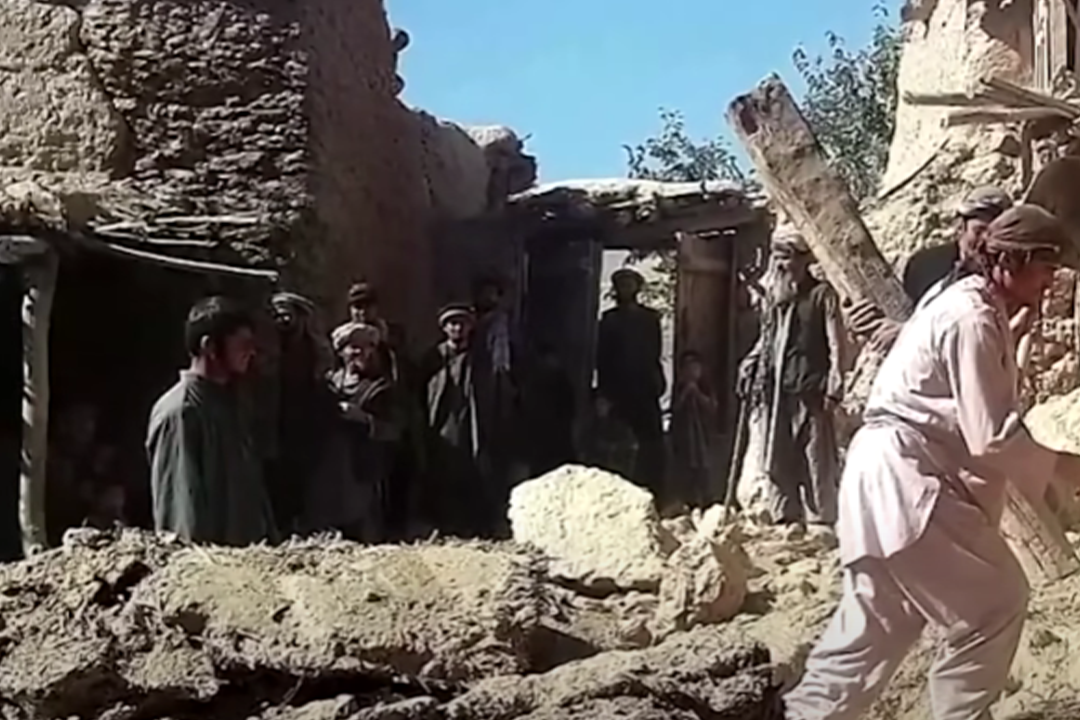
Afghanistan Earthquake Kills Over 800
A devastating earthquake has struck eastern Afghanistan, killing more than 800 people and injuring nearly 3,000 others, according to the United Nations’ humanitarian agency. The disaster, which occurred late Sunday night, has left entire villages destroyed, raising fears that the death toll will climb significantly in the coming days.
A Midnight Disaster
The 6.0-magnitude quake hit at 11:47 p.m. local time (19:47 GMT) on Sunday. Its epicenter was located around 27 kilometers (17 miles) east of Jalalabad, in Nangarhar province, near the border with Pakistan. This region, already one of Afghanistan’s most rugged and isolated areas, was rocked by the tremors while most residents were asleep.
In Kunar province, where most of the fatalities have been reported, homes made of clay, stones, and mud crumbled under the quake’s force. Officials fear that with entire villages flattened, the number of dead could rise substantially as search-and-rescue teams uncover more victims.
Survivors Describe Scenes of Horror
For residents, the night quickly turned into chaos. Faridullah Fazli, who lives in Asadabad on the banks of the Kunar River, described being jolted awake by the powerful shaking.
“There was a very strong earthquake, accompanied by sounds that were very scary,” Fazli told the BBC. “We didn’t sleep until morning. After the earthquake, there were small tremors, and there are still.”
In the immediate aftermath, Fazli went to the local clinic, helping to carry the injured and the dead into ambulances headed to Nangarhar province.
In Mazar Dara, Nurgal region, one resident said 95% of the village had been destroyed, with nearly every household reporting between five and ten people injured. “It was just an atmosphere of fear and terror,” another survivor recalled.
Challenges in Reaching Survivors
The region’s geography has made rescue efforts even more difficult. Roads in Kunar and surrounding provinces are often narrow, muddy tracks winding through steep mountains. Heavy flooding and landslides in recent days have made many routes impassable.
Because of these conditions, rescuers have relied heavily on air support. Helicopters, unable to land at night in the rugged terrain, were delayed until morning. Since then, more than 100 flights have been conducted in clear weather, transporting aid, medical teams, and supplies.
Despite these efforts, officials admit the scope of the disaster remains overwhelming.
“Entire villages are flattened, roads to deep mountainous areas are still closed. So now, for us, the priority is not finding dead under the rubble, but rather reaching out to those injured,” a Taliban official in Kunar province explained.
People Still Trapped Under Rubble
Witnesses and rescue workers have described heartbreaking scenes of people trapped beneath collapsed homes. Some survivors managed to hold on for hours, but others reportedly died before rescuers could reach them.
Syed Raheem, who joined local rescue teams, confirmed that while many had been saved, countless others remain missing. “We fear there are still more trapped under rubble,” he said, underscoring the urgency of the crisis.
Afghanistan’s Mounting Struggles
The earthquake adds yet another layer of suffering for Afghanistan, a nation already enduring severe drought, aid cuts, and what the World Food Programme has called an unprecedented hunger crisis. Rural areas, where most of the quake’s devastation occurred, are particularly vulnerable, with communities dependent on limited farmland and fragile infrastructure.
Taliban officials have appealed for international assistance, stressing that their limited resources are insufficient to address a disaster of this scale. Humanitarian groups are warning that without rapid intervention, the death toll will likely rise and survivors may face secondary crises such as food shortages, disease outbreaks, and displacement.
A Nation in Mourning
As Afghanistan begins the grim task of counting its dead, the country faces yet another humanitarian emergency. Entire communities have been wiped out, families torn apart, and thousands left injured or homeless.
The words of one Taliban official capture the desperation on the ground:
“Most of the dead are under rubble. We are doing everything, but it doesn’t seem possible soon.”
With the world watching, Afghanistan’s latest tragedy is a reminder of the fragile conditions facing a nation already battered by conflict, poverty, and instability.