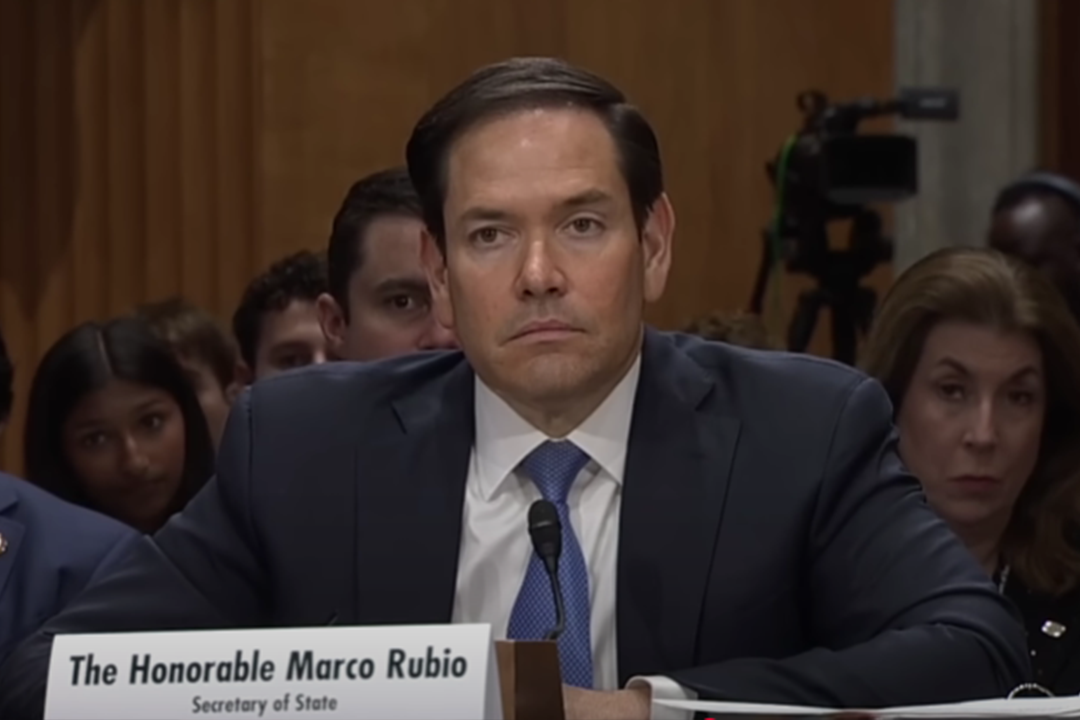
House Panel Presses Rubio to Secure U.S. Funding for the Philippines Amid Rising South China Sea Tensions
The U.S. House Select Committee on the Chinese Communist Party has urged Washington to guarantee funding for the Philippines, citing the need to counter Beijing’s “aggressive and destabilizing actions” in the South China Sea. The call was made through a letter addressed to Secretary of State Marco Rubio, warning that potential budget cuts could undermine U.S. security interests in the region.
Concerns Over Budget Cuts
According to the letter, seen by Reuters on Tuesday, the committee expressed concern about the State Department’s proposed budget for 2026. Specifically, it highlighted the sharp reduction in funding for the International Narcotics Control and Law Enforcement program, which has been critical in supporting the Philippine Coast Guard. Lawmakers warned that slashing this funding would “devastate” programs designed to strengthen the Philippines’ ability to resist Chinese coercion at sea.
Escalating Clashes in the South China Sea
The appeal to secure funding comes amid heightened tensions at Scarborough Shoal, one of the most contested maritime areas in Asia. The shoal, strategically located within the Philippines’ exclusive economic zone, has been the site of repeated clashes between Philippine and Chinese vessels. The committee’s letter noted that “Beijing has significantly escalated its aggressive activities in the South China Sea, including its efforts to unlawfully assert control over much of the Philippines’ exclusive economic zone. (China’s) coast guard and maritime militia regularly attack or physically coerce Philippine vessels.” Lawmakers stressed that the frequency and severity of these incidents demonstrate the immediacy of the threat.
U.S. and Philippine Alliance
The United States has reiterated that its alliance with the Philippines is “ironclad.” Earlier this year, the Philippines was among the countries spared from U.S. aid freezes, underscoring the importance Washington places on its partnership with Manila. However, questions remain about the allocation of the $336 million committed by Washington to Philippine defense modernization, particularly regarding how much of it is directed toward maritime security initiatives.
Funding as a Strategic Imperative
The committee emphasized that maintaining robust funding for Philippine maritime law enforcement is an imperative for U.S. national security interests. Lawmakers stated that undermining these programs would not only weaken the Philippines’ ability to safeguard its waters but could also destabilize the broader Indo-Pacific region. The letter was signed by Representatives Greg Stanton, Seth Moulton, and ranking member Raja Krishnamoorthi, reflecting bipartisan concern.
Rising Maritime Tensions
Recent incidents underscore the urgency of the situation. Last week, China’s coast guard deployed water cannons against Philippine vessels it accused of “illegally invading China’s territorial waters.” Manila described the move as “provocative and dangerous.” Meanwhile, Beijing’s announcement of a national nature reserve at Scarborough Shoal has been interpreted in Washington as a coercive step to advance China’s sweeping territorial and maritime claims. Rubio condemned the measure as a direct threat to regional stability.
China’s Ministry of Foreign Affairs has pushed back against U.S. criticisms, accusing Washington of meddling and attempting to “sow discord and fear” among countries in the region. The Philippines, for its part, has pointed to the 1951 Mutual Defense Treaty with the U.S., which obligates Washington to defend Philippine forces under attack. The committee’s letter noted that a recent near collision between a Chinese navy ship and a Philippine coast guard vessel at Scarborough Shoal could have triggered the treaty.
Treaty Expansion and Future Risks
In 2023, the Philippines successfully lobbied for clarification of the defense treaty, ensuring that U.S. obligations include protection against attacks anywhere in the South China Sea, extending coverage to Philippine coast guard vessels. This expansion has raised the stakes of ongoing maritime confrontations, making future incidents between China and the Philippines even more consequential.
The House panel’s letter concludes with a firm stance: funding for the Philippines must be preserved and strengthened to ensure Manila’s ability to resist Chinese coercion and to safeguard U.S. strategic interests in the region.