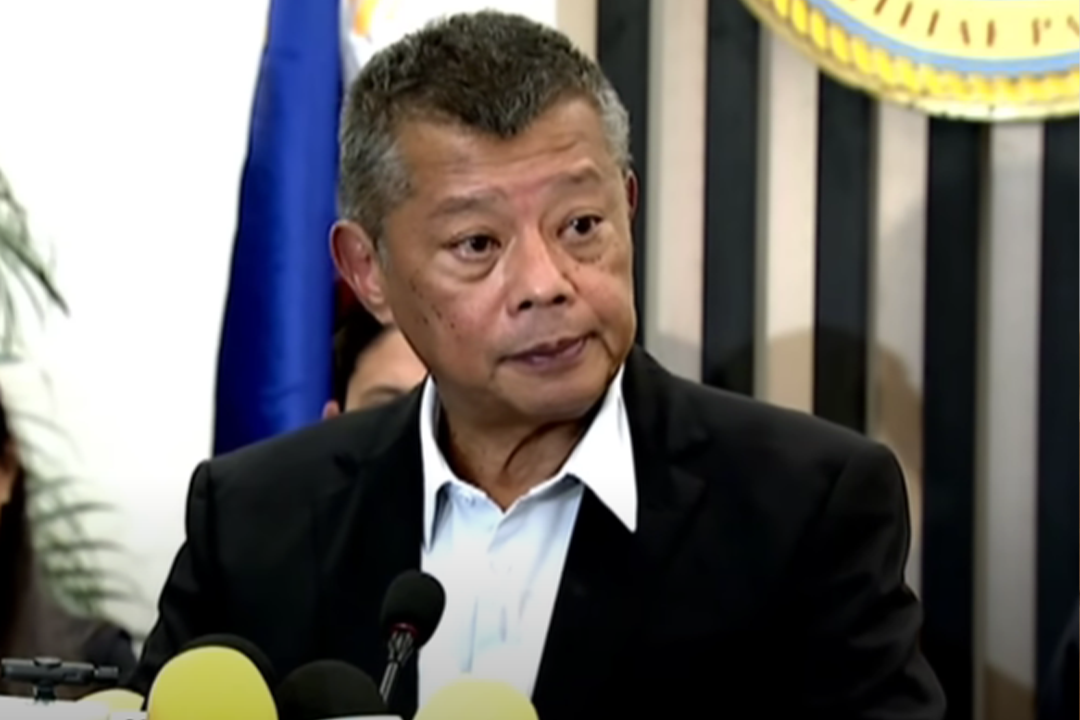
Remulla Named New Ombudsman by President Marcos, Replacing Martires
President Ferdinand R. Marcos Jr. has formally appointed Justice Secretary Jesus Crispin “Boying” Remulla as the new Ombudsman, the Presidential Communications Office (PCO) announced Tuesday. Remulla succeeds Samuel Martires, whose seven-year term ended in July.
Expectations and Mandate
In its official statement, the PCO emphasized that the administration remains steadfast in its fight against corruption. As Ombudsman, Remulla is expected to uphold transparency, bolster anti-corruption efforts, and ensure that justice is administered fairly and efficiently.
“There will be no sacred cows, no exemptions, and no excuses,” the PCO added. The statement stressed that public office is a public trust, and those who violate it must be held accountable. The administration also reiterated its commitment to transparency, fairness, and the rule of law, framing Remulla’s selection as central to a vision of a Bagong Pilipinas serving the Filipino people.
Selection Process and Shortlist
Remulla emerged as the top candidate from a field of 17 applicants screened by the Judicial and Bar Council (JBC). He and six others were shortlisted, including: former Commission on Audit Chair Michael Aguinaldo, Court of Appeals Associate Justice Stephen Cruz, Supreme Court Associate Justice Samuel Gaerlan, Office of the President Deputy Executive Secretary Anna Liza Logan, retired Supreme Court Justice Mario Lopez, and Sandiganbayan Associate Justice Michael Musngi.
The JBC’s voting members included acting Chief Justice Marvic Leonen, Senator Francis Pangilinan, Batangas Representative Gerville Luistro (representing Congress), and former Supreme Court Associate Justice Jose Catral Mendoza, representing retired justices. Other signatories included JBC members Nesauro Firme (academia), Erlinda Piñera Uy (Integrated Bar of the Philippines), and lawyer Jose Mejia (private sector).
Clearance and Past Legal Issues
One critical step in Remulla’s appointment involved clearing him of pending cases in the Office of the Ombudsman, a mandatory requirement under JBC rules. On September 12, the Ombudsman’s office dismissed several cases tied to allegations by Senator Imee Marcos. The claims related to Remulla’s involvement in the supposed transfer of former President Rodrigo Duterte to the International Criminal Court in The Hague. The allegations included graft, arbitrary detention, usurpation of authority, false testimony, perjury, grave misconduct, and conduct prejudicial to the public service.
Remulla secured his formal clearance on September 25, enabling his appointment to move forward.
Remulla’s Career and DOJ Reforms
Before this move, Remulla had served as Secretary of Justice since June 2022. During his tenure, the Department of Justice (DOJ) pursued reforms to modernize the justice system, ease prison congestion, accelerate case resolution, and broaden access to legal services.
Before accepting the Justice post, Remulla was reelected as the Representative of Cavite’s 7th District. His political and administrative background helped distinguish him among the JBC’s finalists.
Support from the Palace
In a Palace briefing, PCO Secretary Dave Gomez expressed “highest confidence” in Remulla’s ability to perform impartially in his new role. “He will be very impartial when he assumes his new role as the Ombudsman,” Gomez said, adding that Remulla stood out among the shortlisted candidates after a rigorous selection process.
Gomez emphasized that, while the president accepts the JBC’s shortlist, it is ultimately the president’s decision to appoint based on that recommendation.
Challenges Ahead
Remulla steps into a role charged with immense public expectation, especially amid ongoing calls for greater accountability in government. As the country’s chief anti-corruption official, he will face pressure to act decisively in high-profile cases and maintain the integrity of the Ombudsman’s office.
With his appointment, the Marcos administration seeks to instill renewed confidence in public institutions and more credible anti-graft mechanisms. Whether Remulla can deliver on these expectations will shape perceptions of the administration’s commitment to transparency and rule of law.