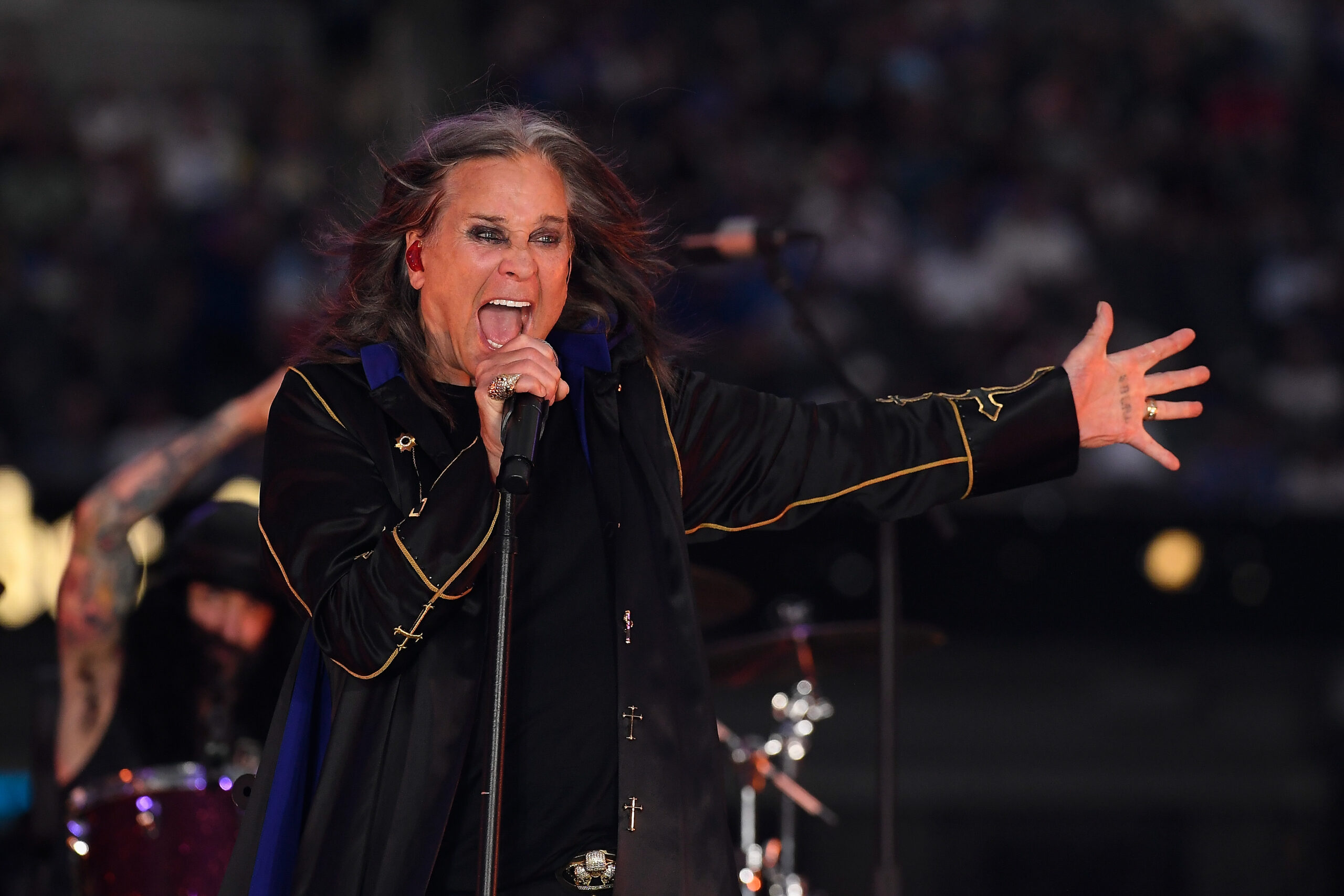
Ozzy Osbourne’s Final Bow: The Wild, Loud, and Lasting Mark He Left on Music
Black Sabbath frontman Ozzy Osbourne passed away on Tuesday, July 22. He was 76. Known for his powerful vocals, controversial stunts, and enduring influence on rock music, Osbourne’s death marks the end of an era for fans across the world. His legacy extends far beyond the stage, spanning decades of groundbreaking music, personal reinvention, and cultural impact. Osbourne’s life was anything but ordinary. Here’s a look back at the milestones that shaped his storied career.
Black Sabbath and the Birth of Heavy Metal (1968–1979)
Ozzy’s career began in Birmingham, England. He teamed up with Tony Iommi, Geezer Butler, and Bill Ward to form a band that would become Black Sabbath. Their 1970 self-titled debut and follow-up Paranoid, introduced a darker, heavier sound that laid the foundation for heavy metal. The band quickly became a major force in rock, thanks to Osbourne’s eerie vocals and their doom-laden riffs. They released a string of influential albums throughout the decade, ending with Never Say Die! in 1978. As their fame rose, so did internal struggles, mainly driven by drug use and personal conflicts. In 1979, Osbourne was officially fired from the band after nearly a decade of helping to shape a new musical genre.
Solo Career and Challenges (1980–1989)
Ozzy was ousted from Black Sabbath. Later on, he launched a solo career that defied expectations. His debut album Blizzard of Ozz (1980) featured “Crazy Train” and introduced guitarist Randy Rhoads, whose neoclassical style became a cornerstone of Osbourne’s new sound. The chemistry was short-lived—Rhoads died in a plane crash during a tour in 1982. Devastated but determined, Osbourne continued to record and perform, releasing albums like Bark at the Moon and The Ultimate Sin. By the end of the decade, he was one of the most recognizable solo acts in rock.
Chart Hits and Ozzfest Legacy (1990–1999)
The 1990s were Ozzy’s heyday, marked by his most successful albums, including No More Tears (1991), which featured fan favorites such as “Mama, I’m Coming Home” and “I Don’t Want to Change the World.” Although he announced a farewell tour in 1992, he returned to performing not long after. In 1996, Ozzy and his wife Sharon launched Ozzfest, a touring metal festival that gave new and underground bands a chance to shine. It quickly became one of the biggest and most influential metal festivals in the world. Around the same time, he reunited with the original members of Black Sabbath for several live shows, bringing renewed attention to their early music.
Became a Reality TV Icon (2000–2009)
For sure, many millennials and GenX know his family’s reality show. In the early 2000s, Osbourne’s fame took a surprising turn with The Osbournes, a reality series on MTV that showcased his chaotic family life. It was one of the first celebrity reality shows of its kind, earning him a new and entirely mainstream fan base. In 2003, he suffered a near-fatal ATV accident, but later recovered and recorded “Changes” with his daughter Kelly—a surprise UK chart-topper. In 2006, Black Sabbath was inducted into the Rock and Roll Hall of Fame, cementing Osbourne’s legacy in both solo and group formats.
Reunion and Farewell (2010–2017)
Ozzy released new solo material during this time, including “Scream” (2010), but the major milestone was reuniting with Black Sabbath to record “13” (2013)—their first studio album together in decades. The album topped charts in multiple countries and led to a global farewell tour, “The End,” which concluded in their hometown of Birmingham in 2017. It was the band’s final chapter and a fitting end to their shared history.
Health Decline and One Last Show (2019–2025)
Ozzy’s health began to decline in 2019 after he was hospitalized with pneumonia and suffered a series of injuries. In 2020, he revealed that he had been diagnosed with Parkinson’s disease. Despite this, he released two more albums—Ordinary Man (2020) and Patient Number 9 (2022), the latter earning him a Grammy. His final public performance took place on July 5 at a concert called “Back to the Beginning” in Birmingham, where he was reunited onstage with his original Sabbath bandmates. Seated due to his condition, he sang for a crowd of more than 40,000. Just over two weeks later, on Tuesday, Ozzy passed away at age 76, ending one of the most storied careers in music history.