No More Fraud-Linked Numbers: Google Updates Destination Requirements Policy
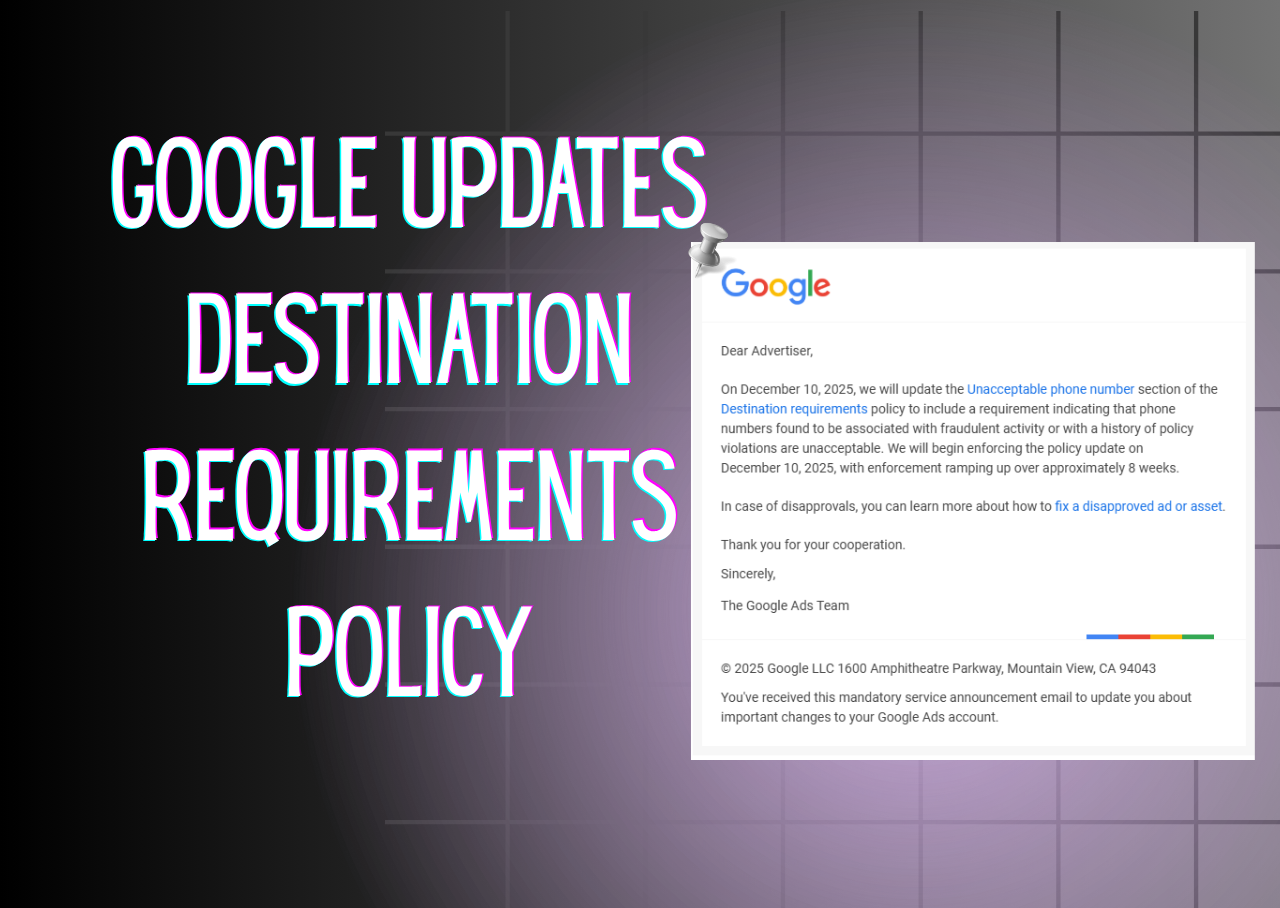
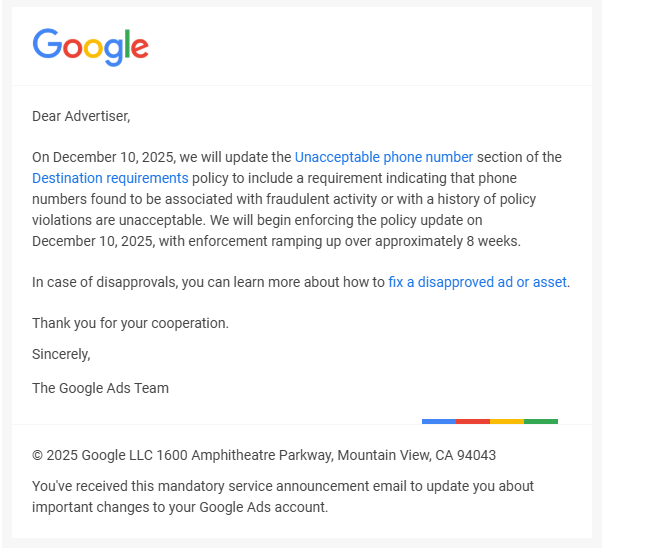
Another Google updates this month: Did you receive this message? Many web owners have received this message on Monday, Nov. 10. In a nutshell, the platform will now block phone numbers linked to fraudulent activity or previous policy violations. This change reflects Google’s continuing effort to fight deceptive advertising practices.
What Are the Changes?
Google’s recent update to its Destination Requirements Policy focuses on tightening ad verification standards. In a nutshell, the company will now block phone numbers linked to fraudulent activity or previous policy violations. This change applies to all ad formats using phone numbers, including call-only ads, call extensions, and message assets. The update is part of Google’s broader effort to strengthen ad credibility and user safety.
What’s the Big Deal?
The new policy isn’t just about stricter verification—it reflects Google’s growing push for transparency across digital advertising. Fraudulent phone numbers have frequently been used to deceive users or circumvent ad verification systems. By cutting these off, Google aims to protect consumers from scams and preserve the integrity of legitimate advertisers. It also sends a clear message that non-compliant advertisers risk losing visibility in search results.
What It Means to Advertisers
Advertisers must now ensure that every phone number associated with their campaigns is valid, local, and relevant to their business. Any unverified or inactive number may result in ad disapproval or suspension. This involves revisiting campaign assets, verifying the accuracy of phone extensions, and ensuring that landing pages meet destination quality standards. Staying proactive in these areas can prevent disruptions in ad delivery and maintain compliance with Google Ads policies.
What It Means to Web Masters
For website owners, this update emphasizes the importance of monitoring destination URLs and their associated contact information. Pages containing outdated or disconnected phone numbers could trigger policy flags. Ensuring that all contact details match verified business information will help maintain ad approval and user trust. This is also a good time to review site speed, mobile accessibility, and transparency elements, such as refund or contact pages, as Google continues to prioritize trustworthy destinations.
Should We Be Worried?
If your ads don’t use phone numbers or your business operates legitimately, there’s nothing to worry about. This update mainly targets fraudulent activity and advertisers who misuse contact details. For compliant advertisers and web masters, it’s simply a reminder to keep assets verified and transparent.