
ANIME REVIEW: New Saga (Non-Spoiler)
When New Saga starts, we see Kyle (Kail) returning four years into the past after the brutal cost of defeating the Demon Lord in his previous life. He’s burdened by what he lost — friends, allies, family — and his entire mindset shifts: no more complacency, no more postponing preparation. The hook is solid because his stakes feel genuine, not just “let’s get stronger for the battle ahead,” but “can I save what I already know will be destroyed?”
Character Developments: More Than Just Kyle
-
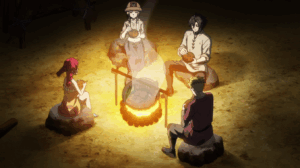
Kyle: The biggest change is that he isn’t the same person he was. He’s gone from survivor to strategist, from reactive to proactive. He’s training more seriously, thinking about alliances, influence, money, even “political capital,” not just brute strength. He struggles with the knowledge he has: how much to share, when to act, and dealing with guilt for those he couldn’t save before. His decisions are often conflicted, especially when he withholds things from people close to him to protect them (even if that might backfire).
-
Liese: She’s usually the tough, headstrong childhood friend. In this past timeline, her development shows more nuance: she worries about Kyle when he suddenly commits to a path that threatens danger. She insists on accompanying him even when he tries to push her away. The tension in their relationship is growing — mutual affection is there, but also jealousy (especially with Urza’s reintroduction) and friction over how Kyle uses his knowledge from the future.
-
Urza: She’s the more mysterious arc so far. Kyle accidentally uses her true name — a sign of deep past intimacy — which scares her because that knowledge only existed in the future timeline. To navigate that, Kyle offers a magical contract that binds him to keep her name secret. Urza is wary, proud, and suspicious, but also intrigued. Her development is around trust: how much to believe Kyle, how much to accept of his past life. She’s less “static love interest” and more someone with constraints, beliefs, and boundaries.

-
Theron: He’s still Kyle’s close friend, the one who knows Kyle is changed but is skeptical of the path he takes. He’s loyal, but there are signs he questions Kyle’s methods. Is Kyle using “future knowledge” fairly? Is he making decisions that risk more than they protect? Theron represents the moral compass, or attempts to be one, even when Kyle veers into morally gray territory.
-
Kyle’s Mother (Layla / Seraira): She’s alive in this timeline and serving as both familial support and magical mentor. Her role gives Kyle a chance to reconnect not just emotionally, but to refine his magical/strategic understanding. There’s tension there too — Kyle’s secretiveness, his urgency, and the burden he carries weigh on their relationship. She worries for him, but also pushes him in subtle ways.
Animation Quality: Where It Shines and Where It Wobbles
The animation has been a mixed bag, but more often in a “good with flaws” way than a disaster.
-
High Points:
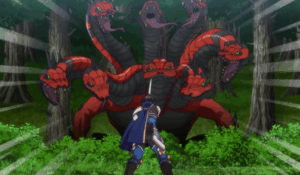
The Demon Lord fight in Episode 1 is excellent: fluid motion, sweeping camera angles, special effects that, for once, feel earned. The hydra battle also stands out: when Kyle uses future-knowledge tactics, the choreography isn’t just flashy, it’s coherent. Even in non-fight moments, the lighting, backgrounds, and expressions often pull their weight. The mood in scenes where Kyle reflects on what he lost works visually: shadows, color tones, particle effects all help.
-
Weak Points:
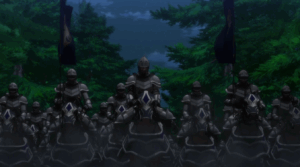
There are times when the animation dips. Some side characters or background motion feel stiff. CG models (horses, objects) occasionally snap out of place, or look noticeably off compared to the rest of the art. Character designs are serviceable but not always distinctive — sometimes generic fantasy style, which makes the more dramatic scenes less visually memorable. Also, pacing issues in animation: some fight scenes feel too brief, or the tension doesn’t quite hit because the motion cuts or transitions aren’t always smooth.
What I Like & What Grinds My Gears
I appreciate that the show doesn’t let Kyle slide by just knowing the future. There are consequences: people distrust him, actions have ripple effects, and he often has to choose which past mistakes to try to fix first. Also, Liese and Urza’s rivalry (heartfelt, but sometimes painful) adds emotional texture.

What bugs me: some characters still don’t get enough screen time to show deeper change. For example, Theron’s doubts are interesting, but he often retreats into the shadow so Kyle can “save the spotlight.” Also, Kyle’s withholding of info — which could be realistic — sometimes feels like a plot convenience: “Let’s delay telling everyone because we need tension.”
My Final Thoughts
Taken all together, New Saga so far manages more than I expected. The characters are growing — Kyle in resolve and strategy, Liese in courage and emotional vulnerability, Urza in trust and guarded openness, Theron in loyalty with complications. There’s enough nuance that I’m invested.
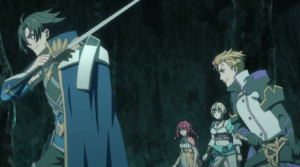
If I rate the show now, I’d push it slightly above 7/10, maybe closer to 7.5/10, because while the foundations are familiar, the emotional beats and character growth are turning what could have been generic into something more engaging.